
Captured, filtered and monitored at every stage.
A lead smelter is only as good as its controls. Ours are built into every stage: closed-system furnaces drawing to bag filters and scrubbers, water treated and returned to production, plastic recovered — and results measured against the limits we are held to.
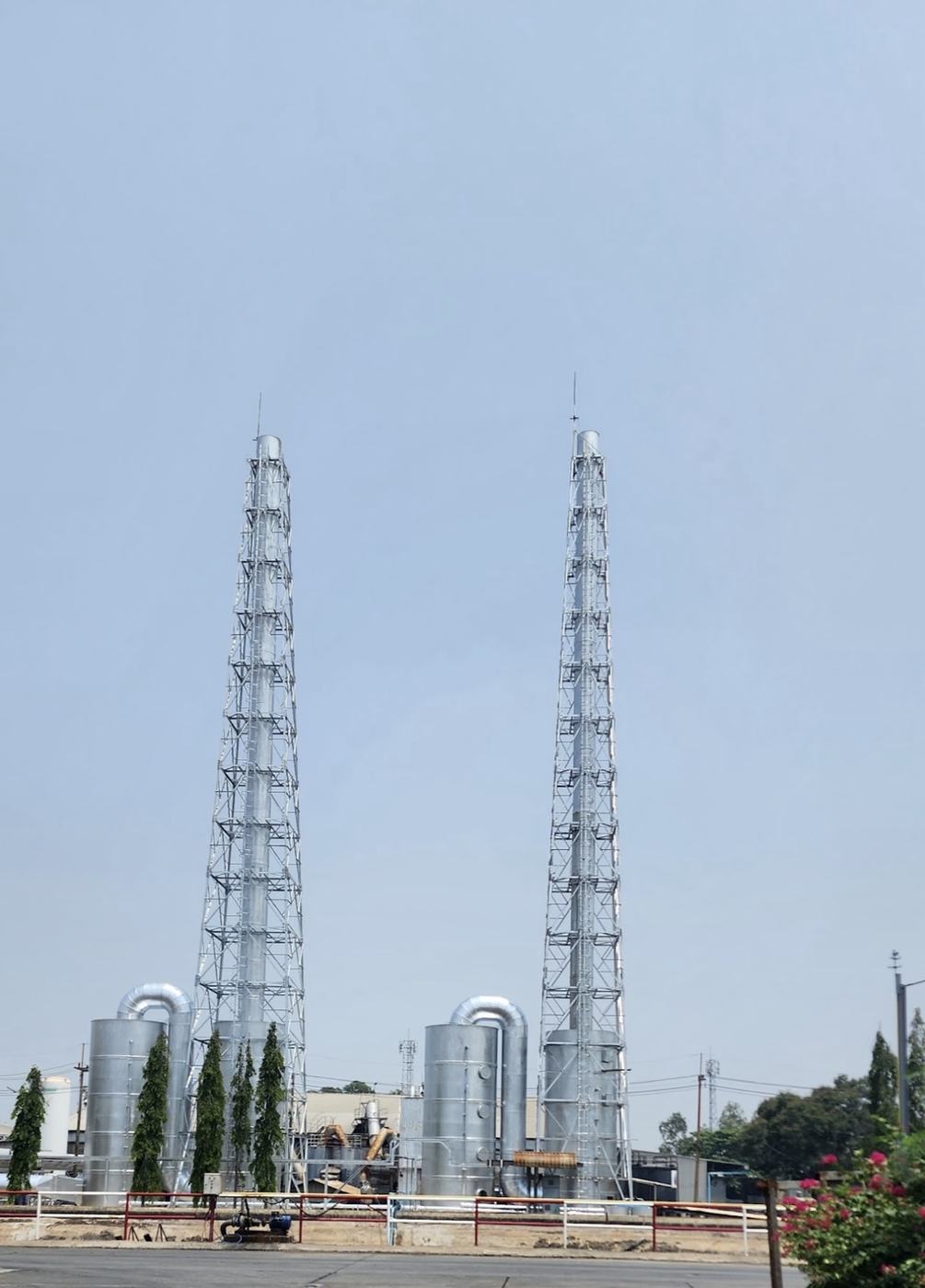
What "advanced green technology" actually means here.
Bag filter and scrubber
Furnace and process gases are captured at source and drawn through bag filters, then scrubbers, removing particulate and acid gases before discharge. The furnaces are fired with oxygen and LNG rather than heavy fuel oil. Stack emissions are tested against Thai regulatory limits.
Closed-loop water
Wastewater from battery breaking is treated to clean, reusable water and returned to the process. Treated and untreated water are both contained within the plant rather than discharged.
Plastic recovery
Polypropylene casings are separated in the breaking system and sent on as recyclable plastic, becoming new products instead of landfill.
Continuous monitoring
Stack, fence-line and water quality are measured on a fixed schedule against Thai DIW and MNRE limits.
How battery scrap becomes clean lead
One battery in, one battery's worth of lead out — and the plastic, acid and water accounted for along the way.
Scrap received
Battery breaking
Desulfurisation
Smelting
Refining for Pure Lead and alloys
Casting
→ Air
Captured at every hood and furnace, drawn through the bag filter system, then tested at the stack against regulatory limits.
→ Water & acid
Acid neutralised; water treated and returned to production rather than discharged.
→ Plastic
PP casings recovered and recycled into new products.
A treatment plant, not a drain.
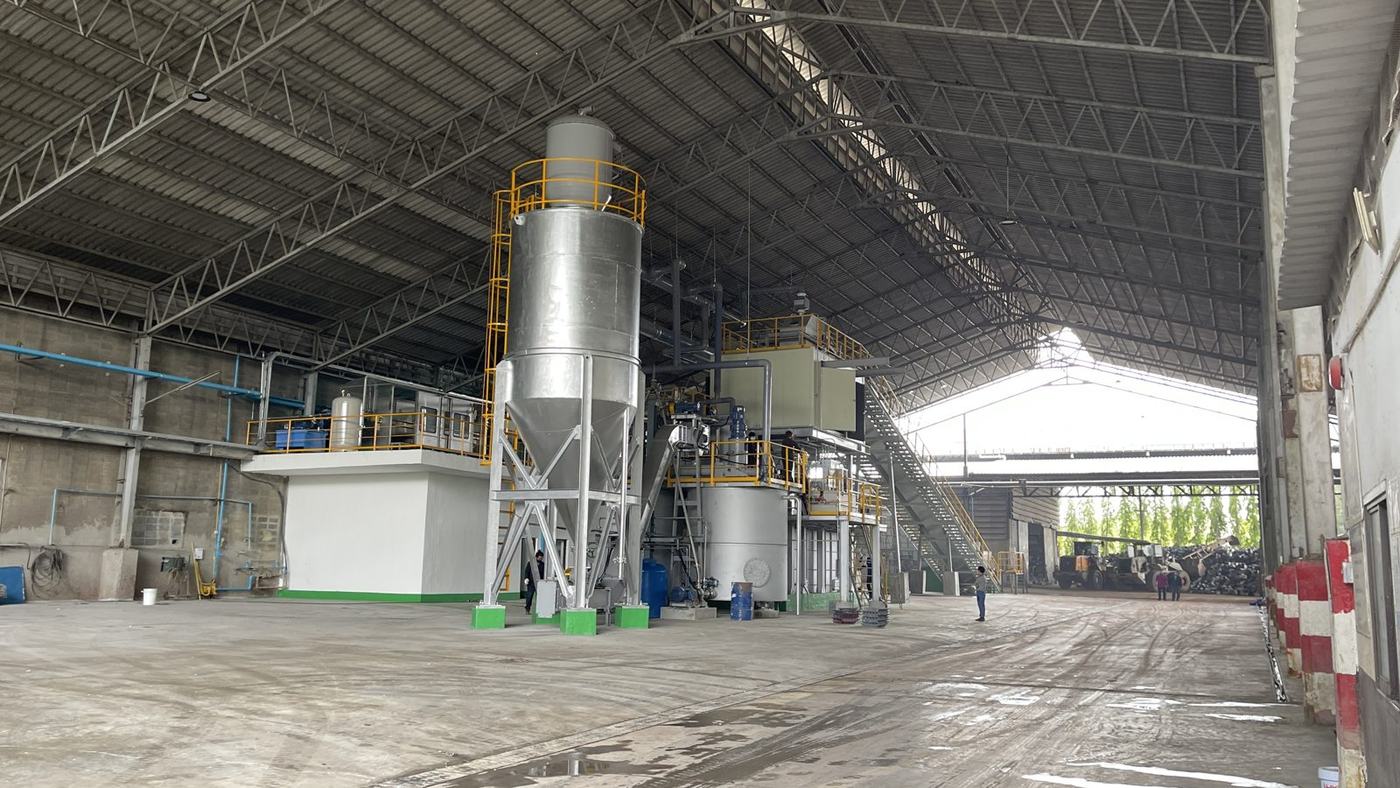
Acid and wash water from battery breaking go straight into our on-site treatment plant. The acid is neutralised, solids are separated, and the water comes back clean enough to reuse in production.
Treated and untreated water are both contained inside the site and returned to the process rather than discharged.
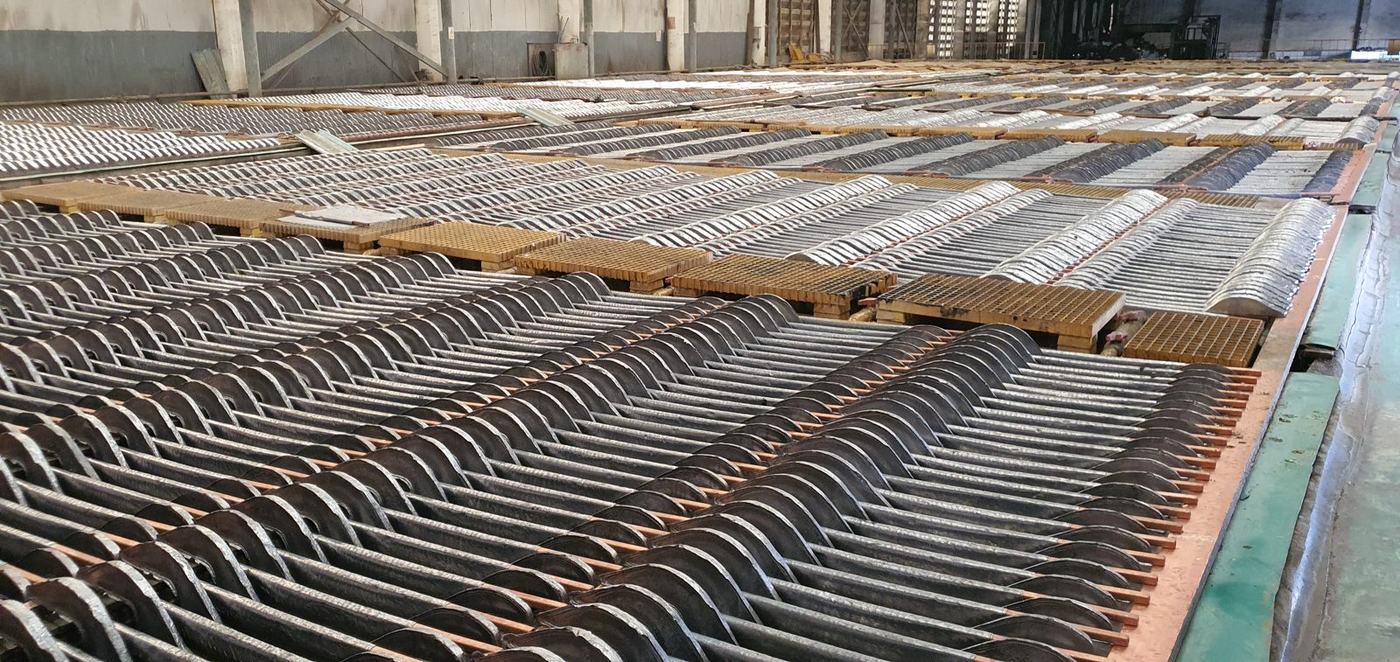
Electrolytic refining.
Bullion from smelting is cast into anodes and refined electrolytically: lead deposits on the cathode while impurities stay behind in the anode slime. It is the route to our 99.994% grade — and the electrolyte circulates in a closed system.
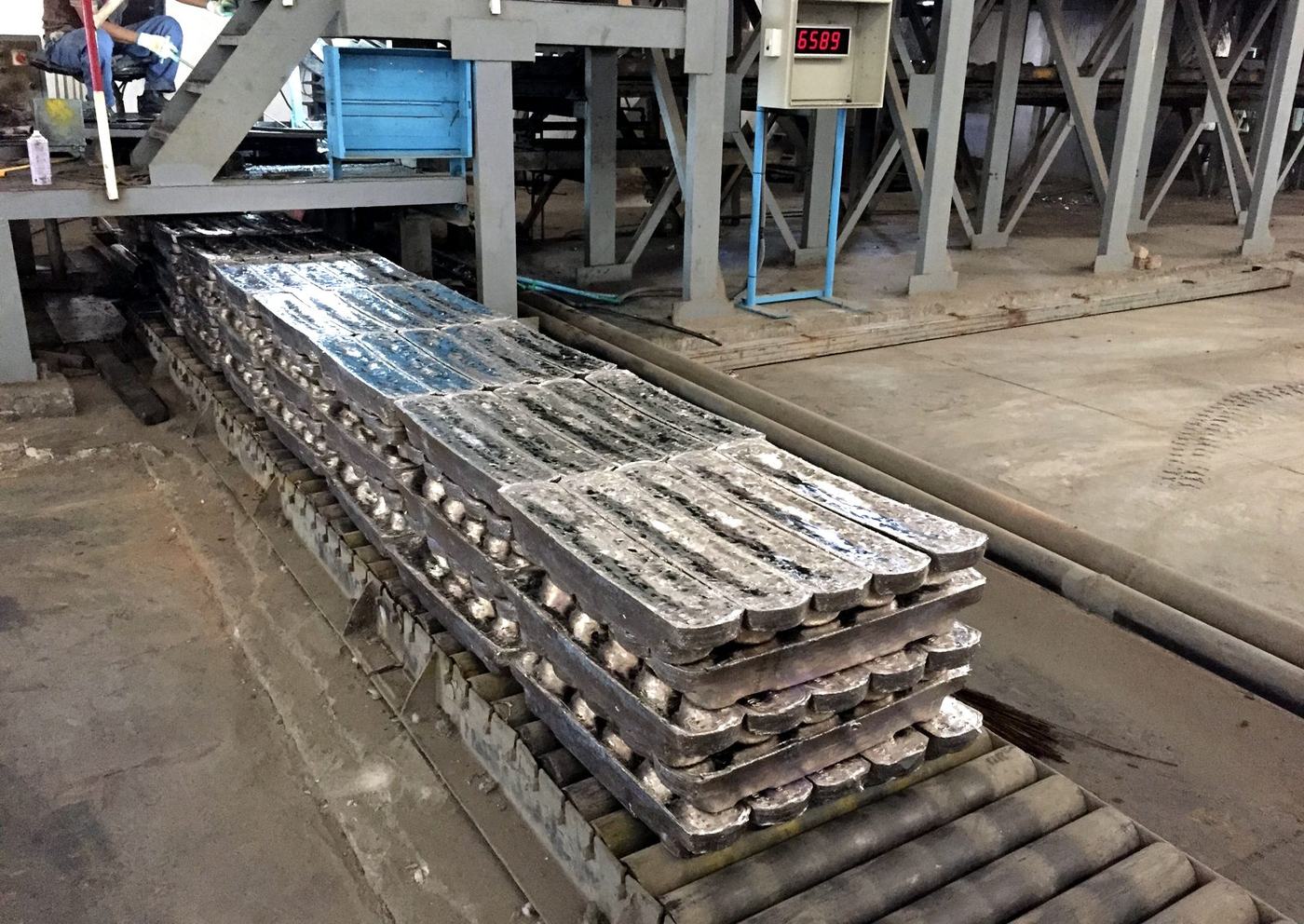
Anode plates → electrolytic cells → cathode lead → melting and casting → XIN XIN.BML99.994 ingots.
Environmental performance
How the plant is controlled, in numbers.
Wastewater treated and reused
Water from battery breaking is treated on site and returned to the process rather than discharged. Treated and untreated water are both contained within the plant.
Recycled input
Every tonne of lead we sell started as a used battery or lead scrap — no mined ore.
Certified environmental management
Acid is neutralised, plastic is recovered, and slag and residues are handled inside our licensed site under an independently certified system.
Stack, fence-line and water quality are monitored on a fixed schedule against the limits set by the Department of Industrial Works and the Ministry of Natural Resources and Environment.
Care that goes past the fence.
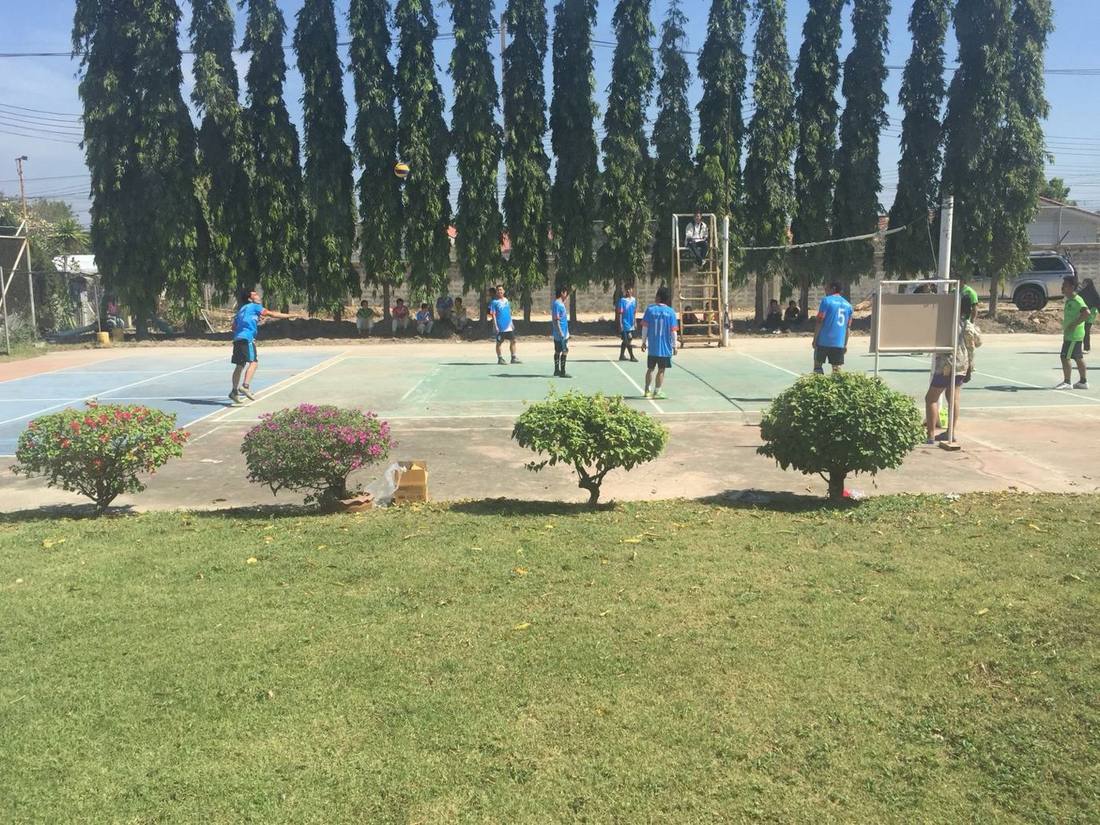
Our factory is laid out as a garden — a safe, clean and healthy place to work. We run health check-ups twice a year for every employee, and extend them to children and elders in the neighbouring community.
Regular sporting events keep the team close. Relationships here go beyond the job: our people treat each other as one team, at work and outside it.
Biannual health checks
Every employee, every six months — including blood-lead monitoring.
Community clinic days
Free check-ups for neighbouring children and elders.